What the Anion Gap Shows
The anion gap is a useful way to read electrolytes from a serum chemistry panel and gauge the level of unmeasured anions in the blood. It supports clinicians evaluate acid-base balance and identify patterns that may point to a metabolic disorder. An elevated or reduced result does not diagnose a disease on its own, but it gives important clues that guide clinical interpretation.
An anion gap calculator is a practical diagnostic tool because it turns common lab values into a meaningful number. The calculation uses the primary measured ions in an electrolyte panel to infer whether there is an excess of acids, a deficiency of proteins, or another change affecting the body’s chemistry. In routine practice, it is usually used to assess metabolic acidosis and separate between different causes of a disturbed acid-base state.
Most of the time, the gap indicates the balance between positively charged ions and negatively charged ions. Because some important ions are not directly measured on standard blood test results, the result helps reveal hidden changes in the blood. That is why the anion gap is so valuable for diagnosis support, especially when symptoms are nonspecific and the blood test results need a more detailed look.
Anion Gap Formula and Inputs
The primary anion gap formula uses 3 common lab values: sodium, chloride, and bicarbonate. In the simplest version, the formula is:
Anion gap = sodium - (chloride + bicarbonate)
These values are usually taken from serum chemistry tests. More specifically, you may see serum sodium, serum chloride, and serum bicarbonate shown in the report. Because these are standard components of the chemistry panel, the calculation can be done easily with the help of an anion gap calculator or manually for review.
Different laboratories may use slightly different methods or reporting conventions. Some include potassium in the formula, while others do not. For everyday use, the sodium-based version is the most common. What matters most is that you use the same method as the lab reference range or reference interval provided with the report, since that affects how the result is interpreted.
To calculate anion gap accurately, ensure the input values come from the same sample and the same time point. Combined or outdated lab values can produce a misleading number. This is especially important when monitoring a changing acid-base disorder or following treatment for a metabolic acidosis.
How to Operate an Anion Gap Calculator
A calculator for the anion gap is straightforward to use, but the nuances matter. A step-by-step calculation helps reduce mistakes and makes the result more convenient to interpret in context. Start with the sodium value, then subtract the sum of chloride and bicarbonate. The number you get is the estimated amount of unmeasured anions.
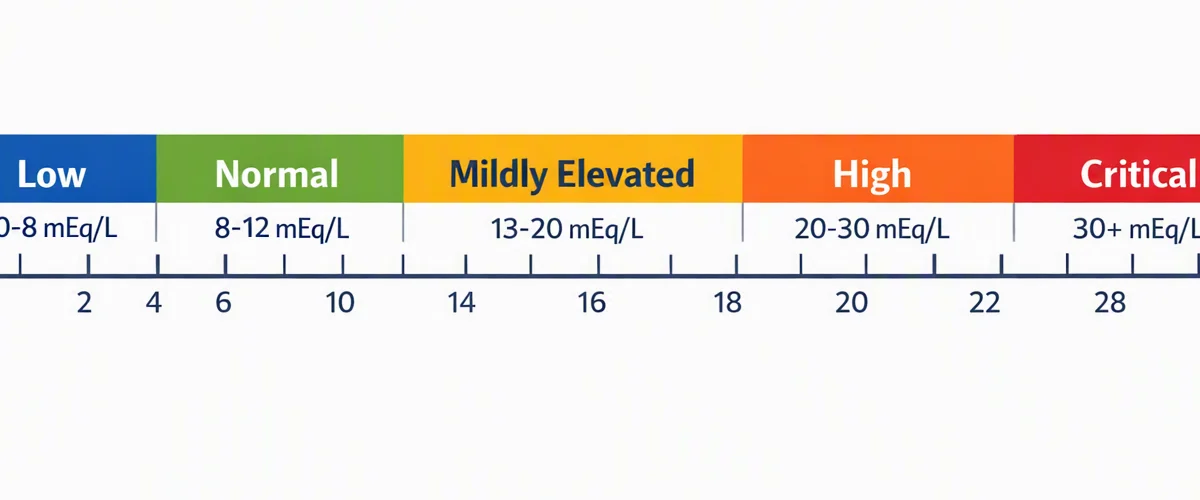
Here is a practical approach:
- Find the serum sodium value from the electrolyte panel. Locate the serum chloride value. Find the serum bicarbonate value. Sum chloride and bicarbonate together. Take away that total from sodium.
This step-by-step calculation is the same approach used by many online and clinical medical calculator tools. The main plus of a calculator is speed, but the real value comes from understanding what the number means once you have it.
Always compare the result with the lab’s reference range. A number that seems mildly off in one setting may be expected in another, depending on the laboratory method and whether the patient has low albumin. Good clinical interpretation requires both the result and the clinical story.
Standard vs Elevated Anion Gap
A normal gap suggests that the relationship between measured positive ions and measured negative ions is in the expected range. A increased anion gap indicates that extra acid substances are often present, which often points toward a form of anion gap metabolic acidosis.
In contrast, a normal result does not always mean everything is okay. Some patients with normal anion gap metabolic acidosis continue to have a medically significant acid-base problem, often due to bicarbonate loss or chloride preservation. This is why test interpretation should always evaluate the full set of electrolytes, not the gap alone.
A high gap is especially valuable for identifying hidden acid build-up. In acidic metabolic states, the anion gap can point toward causes such as lactate accumulation, ketones, kidney dysfunction, or certain toxins. A normal gap can instead imply a different metabolic picture that needs an alternate diagnostic pathway.
The key point is that the anion gap is a pattern-recognition tool. It helps guide the clinician by GOLD MARK breakdown showing whether the blood chemistry aligns with a high gap or low gap pattern, and that can narrow the list of possible causes rapidly.
Typical Causes of a Elevated Anion Gap
A increased anion gap metabolic acidosis occurs when acids accumulate in the blood and add extra unmeasured anions. A number of common conditions can do this, and the clinical context usually helps differentiate among them.
Acidosis from lactate is one of the most frequent causes. It can occur when tissues are not getting enough oxygen, when severe infection is present, or when metabolism is otherwise stressed. In this setting, lactate increases and the gap rises.
Ketone acidosis is another major cause. It can develop when the body breaks down fat for fuel and produces ketone acids. This pattern is often seen with uncontrolled diabetes, prolonged fasting, or heavy alcohol use. The exact cause depends on the overall presentation, but the anion gap often becomes clearly elevated.
Reduced kidney function can also cause a high gap because the kidneys are less able to clear acids from the body. As acid retention increases, the gap may rise progressively. This makes the anion gap a useful marker when evaluating kidney-related metabolic changes.
Toxins are another important category. Certain ingestions and exposures can produce an elevated gap by introducing acids or toxic metabolites. Salicylates are a classic example and should be considered when the lab pattern and symptoms fit. Because toxin-related causes can be serious, an unexpected high gap should prompt careful review of medication history, exposures, and accompanying symptoms.
Reduced Anion Gap Causes and Medical Significance
A reduced anion gap is not as common than a raised one, but it still counts. Often, the first step is to consider lab error or a collection issue, because inaccurate measurements are one of the most frequent explanations. Repeating the test can clarify whether the abnormality is true.
Hypoalbuminemia is a significant true cause of a low gap. Albumin is a negatively charged protein, so when its level falls, the calculated gap may also decrease. This is one reason the measured number can not fully reflect the real acid load if albumin is not considered.
Multiple myeloma is another significant cause because abnormal proteins in the blood can affect the equilibrium of charged particles. In some patients, this changes the anion gap to a degree to be noticeable on routine chemistry testing. A low result does not establish the diagnosis, but it may provide a clue that prompts further evaluation.
Other causes include alterations in measured ions or influence from unusual substances. The practical message is that a low gap should not be ignored. It may reflect lab error, low protein states, or a condition that deserves more workup. If the value is unexpected, repeat testing and broader medical interpretation are often appropriate.
Protein Correction and Adjusted Anion Gap
As albumin is a important unmeasured anion, it greatly affects the calculation. That is why an anion gap calculator is best used when it includes albumin correction or when the clinician corrects the result manually. The corrected anion gap helps estimate the actual acid-base picture when albumin is low.
The reason for this reference correction is simple: low albumin lowers the measured gap even if substantial acids are present. Without adjustment, the result may look normal when it is not. That can mask high anion gap metabolic acidosis and delay recognition of the real problem.
Albumin correction is a form of clinical interpretation that increases accuracy. It is especially relevant in patients with chronic illness, inflammation, malnutrition, or liver-related changes in protein levels. In these settings, the uncorrected number can be deceptive.
Different clinicians and laboratories may use slightly different correction factors, so the main principle is to note that low albumin lowers the gap. If albumin is abnormal, a corrected value gives improved diagnosis support than the raw result alone.
How Anion Gap Fit into Acid-Base Disorders
The anion gap is a part of the broader evaluation of an acid-base disorder. It is particularly useful in metabolic acidosis, where it helps separate high gap from normal gap patterns. This difference changes the differential diagnosis and the next steps in evaluation.
Respiratory compensation is part of the body’s response to metabolic acid buildup. When acidosis is present, breathing may become faster or more profound to help lower carbon dioxide and partially offset the pH change. The anion gap does not measure compensation directly, but it helps identify the primary metabolic problem that triggers it.
The delta gap is another useful concept. It compares the change in the anion gap to the change in bicarbonate and helps reveal mixed disorders. For example, a patient may have a high gap acidosis plus another hidden metabolic issue at the same time. That is why the gap should be interpreted with the bicarbonate level, pH when available, and the overall electrolyte pattern.
In practice, the anion gap works best as a diagnostic guide. It does not replace full evaluation, but it gives structure to the analysis of acid-base balance and helps identify whether the pattern is more consistent with acid gain, bicarbonate loss, or a combined disturbance.
Frequently Asked Questions About Anion Gap Calculation
How do you calculate anion gap from lab values?
Use the anion gap formula: sodium minus the sum of chloride and bicarbonate. In other words, take serum sodium and subtract serum chloride plus serum bicarbonate. An anion gap calculator can do this automatically, but the manual step-by-step calculation is easy to follow and helps with lab interpretation.
What anion gap range is normal?
The lab reference range depends on the testing method used by the laboratory, so the exact reference interval can vary. In general, a result within the lab’s stated range is considered a normal anion gap. Always interpret the number using the specific report rather than assuming a universal cutoff.
Why is albumin used to correct the anion gap?
Albumin has a minus charge and is a major unmeasured anion. When albumin is low, the observed gap can appear falsely low even if acid is present. Albumin correction offers a more reliable corrected anion gap and enhances clinical interpretation, especially when assessing metabolic acidosis.
What does a high anion gap mean?
A increased anion gap usually indicates extra acids or additional anions in the blood. Common causes include lactic acidosis, ketoacidosis, kidney failure, and some toxins, including salicylates. It is a sign that often suggests high anion gap metabolic acidosis.
Can a low anion gap be a sign of a serious condition?
Absolutely. A decreased anion gap can suggest hypoalbuminemia, plasma cell myeloma, or sometimes lab error. Although it is usually less urgent than a very high gap, it can still indicate an important condition and should be reviewed in context with other laboratory results and the overall clinical picture.
When to Seek Medical Evaluation
Variations in the anion gap should always be evaluated alongside symptoms and the complete range of laboratory findings. If a person has signs of severe illness, confusion, rapid breathing, dehydration, persistent vomiting, chest pain, or worsening weakness, they may need prompt medical attention. Those symptoms can occur with severe acid-base problems and should not be overlooked.
Urgent test results require immediate evaluation, particularly when the findings suggest marked acid buildup, renal impairment, or toxic exposure. A worrisome pattern on the chemistry panel should lead to a prompt medical evaluation instead of delaying for signs to worsen.
An anion gap is a valuable evaluation and review tool, but it is not a standalone diagnostic. If you're using an anion gap calculator and the result appears abnormal, the safest next step is to review the findings with a trained clinician. This is particularly relevant when the result is paired with low or high bicarbonate, kidney issues, possible ingestion, or signs of metabolic acidosis.